





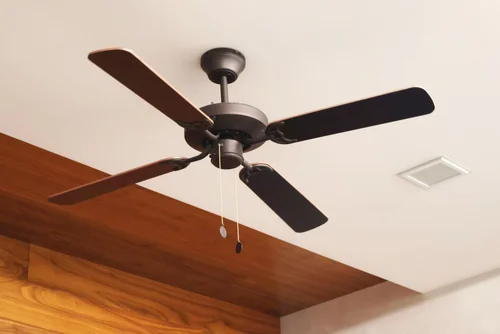
There's a direction switch on the motor housing of your ceiling fan that you might set once and forget. If yours hasn't moved since the fan was installed, it's been running the same direction through every season. The blade direction matters more than you might expect.
Del-Air Heating, Air Conditioning & Refrigeration, LLC handles ceiling fan installation and electrical service across Central Florida, and ceiling fan direction for summer is one of the first questions that comes up when a homeowner calls about their fan.
To schedule ceiling fan installation or electrical service in Central Florida, call (844) 909-3003 or reach out online.
Does Ceiling Fan Direction Make a Difference?
Your ceiling fan doesn't cool air. It moves air, and air moving across skin feels cooler than still air at the same temperature. That's the wind chill effect. Run the fan in the wrong direction, and you don't get it. Set it correctly for the season, and you get that effect plus better air distribution throughout the room.
Which Way Should a Ceiling Fan Spin in Summer?
In summer, your fan should spin counterclockwise. Stand directly beneath it while it's running. If you feel air moving down toward you, it's set correctly.
That downward column of air is the wind-chill effect at work. It makes the room feel cooler than it is, which means you stay comfortable with the thermostat set a few degrees higher than you otherwise would. Your AC runs less. In Florida, where the air conditioner runs for most of the year, that difference adds up.
What About Fan Direction in Winter?
In winter, set your fan to clockwise. You shouldn't feel air pushing down when you're standing beneath it.
Warm air rises and collects near the ceiling. A clockwise fan at low speed pulls that air outward along the ceiling and pushes it down the walls toward the floor, distributing heat more evenly through the room without the wind chill working against your heating system.
Ceiling Fan Direction by Room
The summer and winter rules cover most rooms. A few spaces follow different logic, and the differences are worth knowing.
Depending on the room, the right direction stays the same year-round:
- Vaulted ceilings – Run counterclockwise all year. The ceiling is too far away for wind chill to reach you at normal fan speeds, and a clockwise fan won't push warm air down far enough to matter.
- Dining rooms – Run clockwise. Counterclockwise pushes air directly down onto the table. Food cools faster than it should, and it's uncomfortable for anyone sitting there.
- Home offices – Run clockwise. Papers, notebooks, and anything loose on the desk stay where you put them.
- Outdoor porches and covered patios – Run counterclockwise. The downward airflow disrupts mosquitoes and other flying insects. It won't eliminate them, but it does keep the porch usable longer on a warm evening.
If your covered patio doesn't have a fan installed yet, our electrical team handles outdoor installations and wiring throughout the area.
How to Change Your Ceiling Fan Direction
The direction switch is on the motor housing, usually a small slide or toggle. Turn the fan off, wait for the blades to stop completely, flip the switch, and turn it back on. Some newer ceiling fans have the reverse function built into the remote or a connected app.
Del-Air Heating, Air Conditioning & Refrigeration, LLC's electrical team inspects, installs, and replaces ceiling fans throughout the region. Before you change the direction, check the installation. If your fan wobbles, makes a grinding or clicking sound, or the canopy doesn't sit flush against the ceiling, address that first. A fan with an installation problem puts more stress on the motor when you run it longer than needed to compensate for the wrong direction setting.
If you haven't touched the direction switch yet, flip it the next time you're standing under the fan. You'll feel whether it's right within a few seconds. And if the fan needs work before you get there, our team is available to help.
Call (844) 909-3003 for ceiling fan installation or electrical service in Central Florida, or request an appointment online.