


Living on the Atlantic coast means you’re dealing with moisture every day, not only during summer. The sea breeze off the ocean keeps humid air moving through your neighborhood around the clock, and some of it is always looking for a way inside. Your air conditioner removes some of it, but it was designed to cool air, not to serve as your primary defense against coastal humidity.
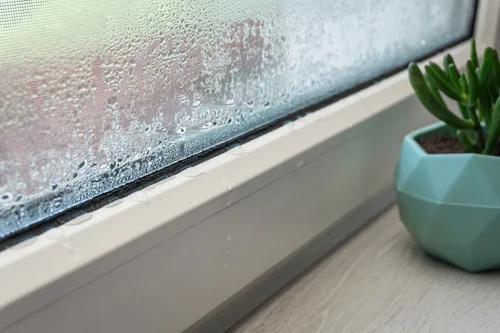
Here’s what shows up in a home when the AC isn’t keeping pace: air feels thick even at 72 degrees, windows fog up in the morning, and a musty smell shows up in different places. If those signs are familiar, the problem isn’t the temperature. It’s the moisture.
Call Del-Air Heating, Air Conditioning & Refrigeration, LLC at (844) 909-3003 or contact us online to schedule a home comfort evaluation in Daytona Beach.
Why Can’t Your AC Keep Up with Coastal Humidity?
Your air conditioner does remove humidity. But not in the way you might think. Warm air passes over the cold evaporator coil, moisture condenses out, and the condensate drains away. This works well when the system runs long, steady cycles.
The problem shows up when the system doesn’t run long enough. An oversized AC cools the air fast, sometimes in under 10 minutes, and shuts off before much dehumidification happens. On mild but humid days, the system won’t run at all. This is when indoor humidity climbs past 50 percent, creating the conditions mold and mildew need. When we come out, and a home feels clammy despite a working thermostat, system sizing is one of the first things we check.
What Steps Help Right Now?
Not all moisture control happens through your HVAC system. Some of it comes down to how well your home is sealed and how you use or maintain other related components.
Consider the following:
- Weatherstripping around doors and windows wears out faster in coastal environments. If the strip around your front door is compressed or cracked, humid Atlantic air is getting in whenever the temperature difference puts pressure on the seal. Replace it. Seal any spots where plumbing or electrical lines pass through exterior walls with caulk.
- Your exhaust fans are underused. Cooking and showering quickly push moisture into the air, and most people turn the fan off before it’s had time to vent. Turn it on before you start and leave it running for several minutes after. Cover pots on the stove.
- Check your HVAC filter. A clogged filter reduces the amount of air moving over the evaporator coil, which in turn reduces how much moisture the system removes. In Florida, monthly checks during peak season aren’t overkill.
- Ceiling fans don’t remove moisture, but better circulation makes humid air feel less oppressive and takes some load off your AC.
When Should You Call a Professional?
Some of these fixes are yours to make. Some aren’t.
Work through the basics and still have something off? Moisture damage on walls or floors, a musty smell showing up in different spots, condensation where there shouldn’t be any. Those are signs moisture is entering from somewhere you haven’t found. Hidden plumbing leaks are a common source. Crawlspace homes are particularly vulnerable, because moisture rises from below the floor slab without any obvious entry point at living-space level.
Our technicians look at the whole picture when we walk in. Not the temperature alone. The system size, the coil, where moisture is tracking. Before we recommend anything, we figure out where the problem is coming from.
What Does a Whole-Home Dehumidifier Do?
A portable dehumidifier handles one room and needs to be emptied. A whole-home unit connects to your existing HVAC system and operates independently. On muggy days when you don’t need cooling, it pulls moisture from the air based on a humidity reading and drains automatically. It handles the whole house.
The part most people miss: sizing matters a lot. Too small and it won’t keep up with coastal conditions. Too large and it cycles too quickly to run efficiently. When our team installs one, we size it to your home’s square footage and construction, and we check your existing system before hooking anything up.
What’s the Right Approach for Your Home?
High indoor humidity can cause real damage when left unmanaged. Mold, warped flooring, degraded insulation. They all follow. Where you start depends on how much moisture you’re dealing with and where it’s coming from. Some homes need a weatherstripping replacement and a new filter. Others need a whole-home dehumidifier and a system assessment.
Del-Air Heating, Air Conditioning & Refrigeration, LLC handles it all. We tell you what we found, what needs attention now, and what you’re looking at down the road.
Our team serves the Daytona Beach area with fully stocked trucks. If your home doesn’t feel right even with the AC running, contact us at (844) 909-3003, and we’ll walk you through what we find.